Beyond Conductivity: The Art of Smart Thermal Management

Did you know that a significant portion of the energy consumed globally is dedicated to heating and cooling? Much of this energy is, frankly, wasted. We often focus on generating heat or cold, but the real magic – and the most substantial savings – lie in how we move it. This is where the concept of efficient heat transfer truly shines, transforming from a mere physics principle into a powerful economic and environmental imperative. It’s not just about brute force conductivity; it’s about intelligent design and strategic application.
The Invisible Dance of Energy: What is Heat Transfer, Really?
At its core, heat transfer is the movement of thermal energy from a hotter region to a cooler region. This fundamental process occurs through three primary mechanisms: conduction, convection, and radiation.
Conduction: Think of it like a chain reaction. Heat energy is passed from one molecule to another through direct contact. Metals are excellent conductors, which is why your cooking pot gets hot on the stove.
Convection: This involves the movement of fluids – liquids or gases. When a fluid is heated, it becomes less dense and rises, while cooler, denser fluid sinks. This creates a continuous circulation, carrying heat with it. Boiling water is a classic example.
Radiation: This is heat transfer without a medium, like the warmth you feel from the sun or a campfire. It travels in electromagnetic waves.
Understanding these mechanisms is the first step, but mastering efficient heat transfer involves manipulating them to our advantage, minimizing losses and maximizing desired thermal movement.
Rethinking Insulation: More Than Just a Barrier
When we think of efficiency, insulation often comes to mind. And yes, good insulation is crucial for reducing unwanted heat transfer. However, the story doesn’t end with simply slapping on a thick layer of foam. The type of insulation, its application, and its interaction with other systems matter immensely.
Consider the subtle nuances:
Vacuum Insulation Panels (VIPs): These offer incredibly high thermal resistance in a very thin profile, perfect for space-constrained applications. They work by creating a vacuum, which drastically reduces conduction and convection.
Aerogels: These are some of the lightest solid materials known, often called “frozen smoke.” Their highly porous structure traps air, making them exceptional insulators with remarkably low thermal conductivity.
Reflective Insulation: Instead of resisting heat flow, this type reflects radiant heat, effectively keeping heat out in the summer and in during the winter. It’s particularly effective in attics and walls.
The key here is choosing the right insulation for the specific heat transfer challenge. A blanket that’s perfect for your living room might be entirely inappropriate for a cryogenic storage tank.
The Power of Phase Change Materials (PCMs): Storing and Releasing Heat Intelligently
One of the most fascinating advancements in thermal management involves Phase Change Materials (PCMs). These are substances that absorb or release large amounts of thermal energy during the process of melting or freezing. They effectively act as thermal batteries.
Imagine a building material infused with PCMs. During the day, when the sun heats the building, the PCM melts, absorbing a significant amount of that heat without a substantial rise in temperature. As the ambient temperature drops in the evening, the PCM solidifies, releasing the stored heat. This dramatically reduces the need for active heating and cooling systems, leading to remarkable energy savings.
In my experience, the potential of PCMs is still vastly underestimated. They offer a passive way to stabilize temperatures, smoothing out the peaks and valleys of thermal load. This not only saves energy but also improves occupant comfort and the lifespan of HVAC equipment by reducing cycling.
Optimizing Convection: The Art of Fluid Dynamics
Convection is a workhorse in many thermal systems, from cooling electronics to heating homes. However, simply moving air or liquid isn’t enough; we need to move it effectively.
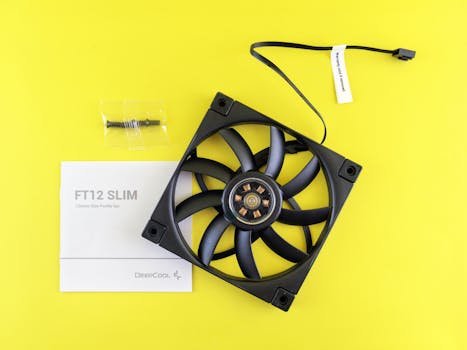
Forced Convection: This involves using fans or pumps to actively circulate the fluid. The design of the impellers, ducts, and the overall flow path are critical. Optimizing airflow can reduce fan energy consumption while achieving better cooling. Think about the difference between a gentle breeze and a powerful gust – both move air, but one is far more effective at cooling you down.
Natural Convection: This relies on density differences caused by temperature variations. While less energetic, it’s incredibly energy-efficient. Architects have long used natural convection for ventilation and passive heating. Understanding buoyancy forces and designing spaces that encourage this natural flow is a subtle but powerful tool.
Beyond simply moving the fluid, the surface area for heat exchange is paramount. This is where heat sinks and heat exchangers come into play. Their intricate fin designs and specialized geometries are meticulously engineered to maximize the contact between the fluid and the heat-generating or heat-absorbing surface, dramatically enhancing the rate of convective heat transfer.
The Unseen Enemy: Minimizing Thermal Bridging
Even with excellent insulation, thermal bridges can silently siphon away precious energy. These are areas within a building envelope or a piece of equipment where heat can bypass the insulation. Common culprits include:
Structural elements: Metal studs, concrete beams, or even nail penetrations can act as conduits for heat.
Junctions and corners: Where walls meet floors, roofs, or windows, insulation layers can be discontinuous, creating pathways for heat loss or gain.
Gaps and cracks: Air leaks are notorious thermal bridges, allowing unconditioned air to enter or escape.
Addressing thermal bridging requires meticulous attention to detail during design and construction. Techniques like continuous insulation, thermal breaks in metal components, and careful sealing of all joints are essential for achieving truly efficient heat transfer in building envelopes and complex machinery. It’s about seeing the whole system, not just individual components.
Conclusion: A Proactive Approach to Thermal Efficiency
Mastering efficient heat transfer is no longer a niche engineering concern; it’s a fundamental requirement for sustainability and economic viability. By understanding the nuances of conduction, convection, and radiation, and by strategically employing advanced materials like PCMs, optimizing fluid dynamics, and diligently eliminating thermal bridges, we can unlock significant energy savings, improve system performance, and reduce our environmental footprint.
It’s about shifting our perspective from simply managing heat to orchestrating it with precision. What innovative ways can you* re-imagine thermal flow in your own projects or daily life?


